
Before bringing our workplace safety and quality of life (non-economic) proposals to the university administration, we summarized the content of these proposals in the platform below. This platform was ratified by our membership before bringing our contract proposals to the table.
Workplace Safety and Quality of Life Platform
The workplace safety and quality of life proposals are the non-economic provisions in our contract to secure a work environment that is safer and includes transparent policies for working procedures and resolution of workplace issues. This initial step allows us to gauge the university’s responsiveness and receptiveness. It is important to note that this platform is a general overview of what we will present to UMN at our negotiating table; the exact language presented to administration will vary as we bargain with them. These proposals will:
- Ensure our union flourishes by:
- Legally recognizing the union;
- Requiring UMN to provide UE Local 1105 (UMN-GLU) office and meeting space on campus;
- Defining the bargaining unit as all graduate assistants enrolled in UMN graduate degree programs who hold the job titles research assistant, teaching assistant, teaching associate I or II, project assistant, or administrative fellow I or II.
- Outline clear job expectations and responsibilities for workers by:
- Requiring UMN to clearly state all expectations of graduate assistant positions, and to deliver appointment information in a timely manner;
- Setting an upper limit on the number of working hours per week that UMN can impose;
- Prohibiting discipline or discharge of employees without just cause, providing support guidelines for canceled appointments, and instituting minimum terms for appointments;
- Ensuring high-quality job training and professional development opportunities;
- Requiring adequate and safe personal office space, access to proper work tools and supplies, and the right to remote work when necessary.
- Secure protections and benefits for all workers including:
- Prohibiting discrimination due to race, ethnicity, gender, sexual orientation, caste, nationality, disability, and other protected classes
- Accommodations and accessibility standards including requirements for: gender-neutral restrooms, multi-faith prayer rooms, lactation spaces, and yearly anti-discrimination training;
- Transparency on accommodations for employees with disabilities and chronic health conditions;
- Requiring the health and safety of workspaces and labs;
- Providing on-campus safety measures in public health emergencies;
- Sufficient paid leave, remote work options, and timely paperwork to enable international employees’ visa and immigration proceedings;
- Increased efforts to support international employees through practical training (e.g., OPT/CPT), tax filing assistance, and English language resources for spouses and dependents.
- Provide clear procedures for resolving contract violations by:
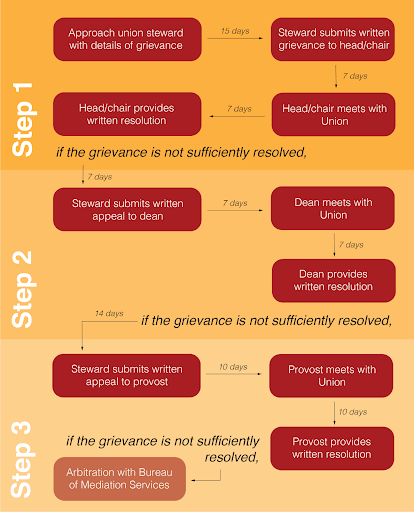
- Establishing a grievance procedure that protects union members by allowing us to hold the university accountable for contract violations and unfair labor practices;
- Ensuring that union representatives (stewards) and employees may be present at all meetings related to workplace grievances. Upon request, translators and interpreters will be made available at no cost to the employee.
 UMN Graduate Labor Union